
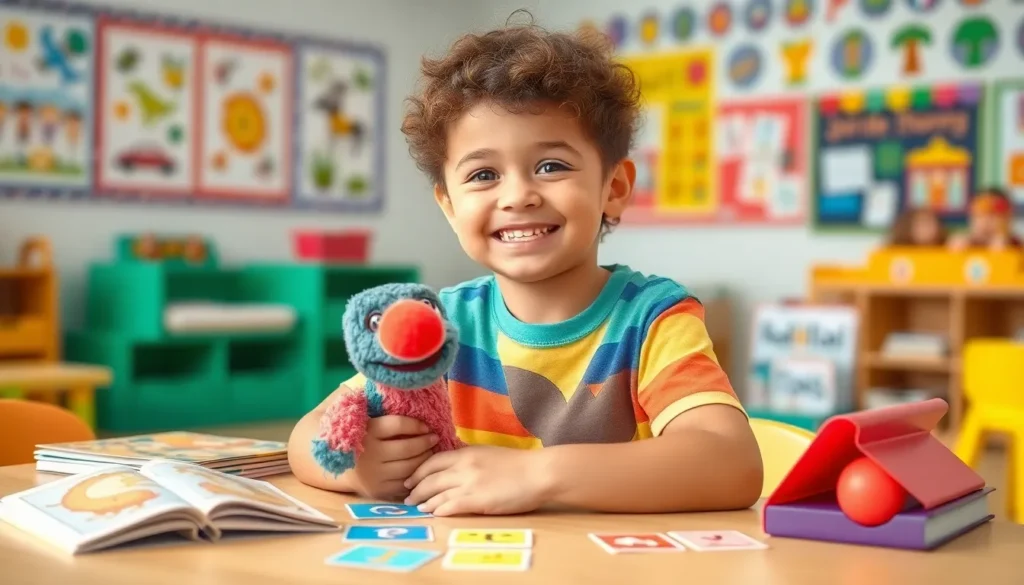
Every parent knows that preschoolers are little sponges, soaking up everything around them. But how do you make language learning as fun as a trip to the candy store? Enter engaging language activities that turn playtime into a linguistic adventure. These activities don’t just keep kids entertained; they build essential skills that’ll have them chatting up a storm in no time.
Table of Contents
ToggleImportance Of Language Activities For Preschoolers
Language activities play a vital role in preschoolers’ development. Engaging with language helps build foundational communication skills. Children who participate in structured language play show improvements in vocabulary acquisition. Enhancing language skills early fosters a love for learning and exploration.
Regular exposure to language-rich environments allows preschoolers to practice speaking and listening. Activities like storytelling and rhyming increase phonemic awareness, crucial for reading readiness. Interactive games involving dialogues also enhance social skills. Encouraging children to express their thoughts boosts their confidence in communication.
In addition, activities that involve songs and chants promote rhythmic awareness and memory. Repetitive phrases and patterns aid in language retention. Constantly hearing varied vocabulary from caring adults expands their understanding of language nuances. Utilizing props or visuals during language activities makes learning more engaging for young minds.
Improvement in cognitive skills accompanies effective language activities. As children explore new vocabulary, they also develop critical thinking abilities. Collaborative play with peers encourages negotiation and collaboration, critical for social development.
Ultimately, prioritizing language activities in preschool ensures a holistic approach to early childhood education. With consistent practice, children can become proficient communicators well before entering formal schooling. These activities not only lay the groundwork for language skills but also nurture an environment where curiosity and love for learning thrive.
Types Of Language Activities
Engaging preschoolers in language activities enhances their communication skills. Various interactive activities offer opportunities for children to explore language in fun ways.
Storytelling And Reading
Storytelling captivates preschoolers’ imaginations while facilitating language development. Books introduce new vocabulary and concepts, sparking curiosity in young minds. Shared reading sessions encourage discussions around stories, promoting comprehension and critical thinking. Utilizing picture books with vivid illustrations aids in visual learning, making stories more relatable. This approach not only fosters language acquisition but also instills a love for reading. Diverse genres like fairy tales and non-fiction add variety, keeping children engaged.
Games And Interactive Activities
Games engage preschoolers actively while reinforcing language skills. Word-based games stimulate vocabulary through playful competition. For instance, activities like “I Spy” encourage observation and descriptive language. Interactive storytelling apps blend technology with traditional storytelling, appealing to tech-savvy learners. Role-playing scenarios provide opportunities for children to apply language in contextual settings, enhancing conversational skills. Incorporating songs and chants promotes rhythm and memorization, binding fun with learning. These activities not only support language growth but also build social interactions among peers.
Benefits Of Language Activities
Language activities significantly benefit preschoolers in multiple ways. Engaging in these activities enhances essential skills vital for their growth.
Cognitive Development
Cognitive development improves through language activities by stimulating critical thinking. Activities like storytelling spark creativity as children explore different narratives. Vocabulary acquisition increases when children encounter new words in context. Practicing language enhances memory retention; repeated exposure reinforces learning. Engaging in conversations fosters comprehension skills, solidifying understanding. Children show greater confidence in expressing thoughts when involved in interactive games. These experiences contribute to overall cognitive growth, creating a strong foundation for future learning.
Social Skills Improvement
Language activities play a crucial role in enhancing social skills among preschoolers. Engaging with peers during collaborative activities promotes teamwork and cooperation. Children learn to negotiate during play, improving their ability to share and listen. Practicing turn-taking in conversations develops patience and respect for others’ opinions. Additionally, role-playing scenarios provide opportunities for empathy, as children step into various characters. Expressing emotions through language fosters genuine connections among peers. This emphasis on social interaction lays the groundwork for effective communication in their future relationships.
Tips For Implementing Language Activities
Implementing effective language activities enhances preschoolers’ learning experiences. Focus on creating opportunities for language exposure and practice.
Creating A Language-Rich Environment
Setting up a language-rich environment fosters vocabulary growth. Include books, labels, and conversation prompts in play areas. Surround preschoolers with diverse materials to encourage exploration. Incorporate storytelling sessions that spark interest and imagination. Regularly introduce new words during daily routines to build familiarity. Use songs and rhymes to enhance phonemic awareness and encourage participation. Provide engaging language activities during snack or playtime to blend learning and fun.
Involving Parents And Caregivers
Engaging parents and caregivers enhances children’s language development. Share activity ideas with families to promote consistent practice at home. Hold workshops that inform caregivers about language strategies. Encourage them to read with their children daily, making it an enjoyable bonding time. Offer resources such as book lists and apps that support language learning. Highlight the significance of everyday conversations for vocabulary building. Foster open communication between educators and families to support each child’s language journey.
Embracing language activities in preschool not only enhances children’s communication skills but also ignites their passion for learning. By integrating play with structured language exercises, caregivers and educators can create an enriching environment where preschoolers thrive.
These activities foster critical thinking and social interaction while building a strong foundation for literacy. As children engage in storytelling, games, and collaborative play, they develop essential skills that will serve them well into their future.
Prioritizing language-rich experiences nurtures a love for reading and effective communication, ensuring that preschoolers are well-prepared for the challenges ahead. With consistent practice and involvement from families, the journey of language development can be both enjoyable and impactful.