
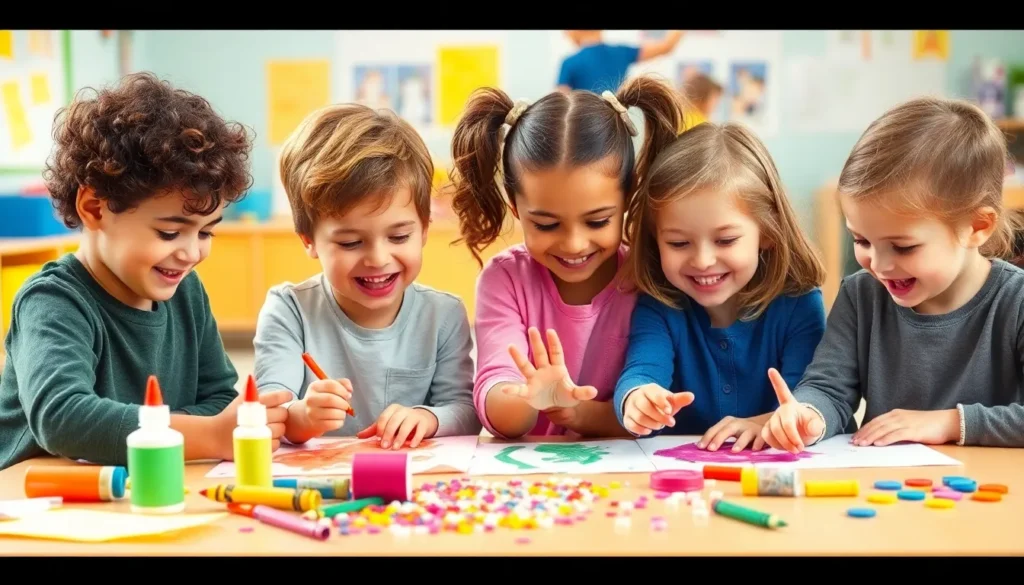
Every parent knows that keeping a preschooler entertained can feel like trying to herd cats. But what if there was a secret weapon that not only keeps them busy but also sparks their creativity? Enter the wonderful world of preschool arts and crafts! From glitter explosions to finger painting masterpieces, these activities are the perfect blend of fun and learning.
Table of Contents
ToggleBenefits of Preschool Arts and Crafts
Preschool arts and crafts offer various developmental benefits for young children. Engaging in creative activities boosts multiple skill sets crucial for early growth.
Cognitive Development
Participating in arts and crafts enhances cognitive skills. Children solve problems when they create with different materials. They learn about shapes, colors, and spatial awareness through various projects. Incorporating storytelling into creative sessions encourages imaginative thinking. Exploring new techniques fosters curiosity and critical thinking abilities.
Motor Skills Enhancement
Arts and crafts significantly improve motor skills. Manipulating scissors, glue, and paintbrushes develops fine motor skills. Coordinating hand movements strengthens hand-eye coordination. Through crafting activities, children gain confidence in their dexterity. Various materials encourage exploration, allowing them to practice different grip styles while creating.
Emotional Expression
Fostering emotional expression occurs through arts and crafts. Children communicate feelings and thoughts visually rather than verbally. Art becomes a safe outlet for expressing emotions such as happiness or frustration. Engaging in creative projects facilitates self-discovery and boosts self-esteem. Sharing finished artwork with peers promotes social interaction and validation.
Types of Preschool Arts and Crafts
Various types of preschool arts and crafts engage children, enhance creativity, and support development. These activities cater to diverse interests and skills.
Drawing and Painting
Children express themselves through drawing and painting. Crayons, markers, and watercolors provide vibrant options. Single sheets or large canvases can inspire creativity. These activities strengthen fine motor skills and hand-eye coordination. Additionally, they allow young artists to explore colors and shapes. Encouraging experimentation with different materials promotes a sense of achievement.
Collage and Mixed Media
Collage and mixed media projects combine various materials. Paper, fabric, and natural items create unique masterpieces. This hands-on approach enhances tactile learning and expands creativity. Children can cut, paste, and arrange components in limitless ways. Exploring textures and colors fosters cognitive skills and imaginative thinking. Using recycled materials not only encourages creativity but also teaches environmental awareness.
Sculpting and 3D Projects
Sculpting and 3D projects introduce dimensional art. Clay, dough, and even recycled boxes can transform into imaginative sculptures. Manipulating material strengthens motor skills and problem-solving abilities. Working on three-dimensional forms encourages spatial awareness in young minds. It also allows for collaborative projects, enhancing social skills. Children gain confidence as they create and share their unique designs.
Tools and Materials for Preschool Arts and Crafts
Selecting the right tools and materials enhances preschool arts and crafts, ensuring that children enjoy their creative experiences safely and effectively.
Essential Supplies
Basic supplies include washable markers, crayons, and colored pencils. Glue sticks and liquid glue assist in sticking materials together. Construction paper, watercolor paper, and craft foam offer diverse surfaces for creativity. Scissors designed for children promote safe cutting experiences. Additionally, items like glitter, stickers, and stamps add flair to projects. Providing a variety of textured materials, such as fabric scraps and natural items like leaves and twigs, encourages exploration and creativity. Quality supplies foster imaginative expression among young artists.
Safety Considerations
Safety remains a priority during arts and crafts activities. Non-toxic materials, including washable paints and child-safe glue, prevent harmful exposure. Choosing age-appropriate scissors helps minimize injury risks. Supervision plays a crucial role; adults should monitor young children as they engage in cutting or using small items. Ensuring a clean workspace can reduce hazards and improve focus. Storing supplies out of reach when not in use promotes safety and organization. Discussing safety rules before starting crafts encourages a sense of responsibility in young creators.
Engaging Preschoolers in Arts and Crafts
Engaging preschoolers in arts and crafts requires creativity and intentionality. Parents can utilize various techniques to spark interest in these activities.
Creative Techniques
Incorporating paint, markers, and clay enhances creative techniques. Using unconventional materials like cardboard or recycled items adds uniqueness to projects. Hands-on activities such as stamping with everyday objects stimulate curiosity. Combining drawing with collage invites experimentation with textures. Providing choices empowers children to express their ideas freely, instilling a sense of ownership in their artwork. Each technique nurtures fine motor skills and cognitive development.
Encouraging Imagination
Promoting imagination involves setting up an inspiring environment. Providing diverse materials encourages children to explore without limitations. Asking open-ended questions about their creations fosters critical thinking. Using storytelling alongside art activities deepens engagement and enhances narrative skills. Sharing stories about the creative process helps connect emotions with artistic expression. Through these practices, preschoolers develop confidence and learn to visualize their thoughts.
Preschool arts and crafts offer a valuable platform for young children to explore their creativity while developing essential skills. These activities not only entertain but also foster cognitive growth and emotional expression. By selecting the right materials and encouraging imaginative play, parents can create enriching experiences that promote learning and confidence.
As children engage in various projects, they build fine motor skills and enhance their understanding of the world around them. Embracing arts and crafts in preschool settings paves the way for lifelong learning and creativity. With the right approach, parents can nurture their child’s artistic journey and support holistic development.