
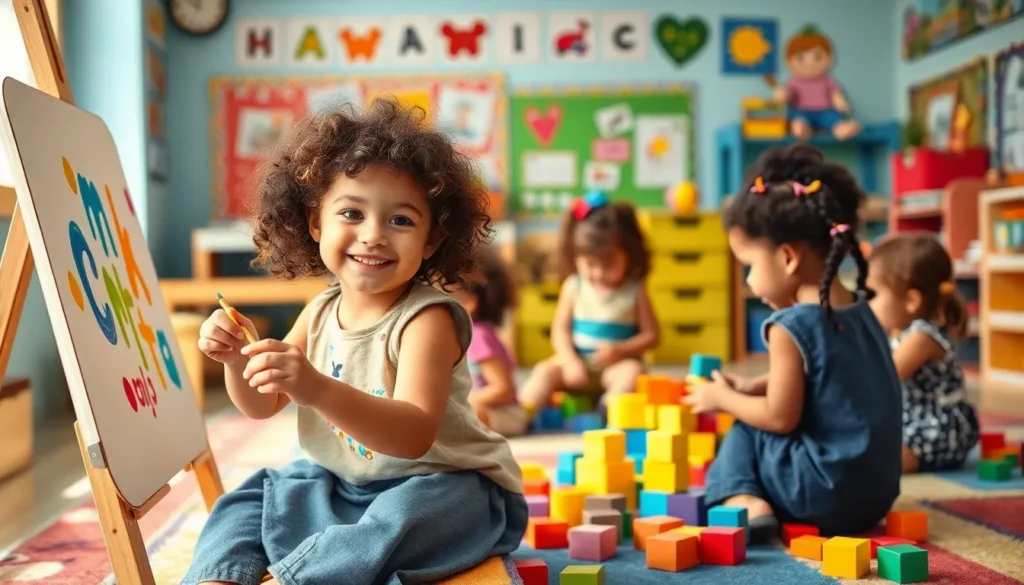
Every parent knows that preschool isn’t just about finger painting and snack time—it’s the launchpad for a lifetime of learning. Imagine a place where tiny humans dive into the wonders of the world, armed with crayons and an insatiable curiosity. Preschool learning isn’t just play; it’s the secret sauce that helps kids develop essential skills while having a blast.
Table of Contents
ToggleOverview Of Preschool Learning
Preschool learning focuses on holistic development through structured activities and play. Children engage in active exploration, which promotes cognitive and social growth. They discover language skills through storytelling, songs, and conversations that build vocabulary and comprehension. This early exposure to language fosters critical communication abilities.
Learning in preschool also emphasizes motor skills through hands-on activities like drawing or building with blocks. These experiences refine fine motor skills and enhance hand-eye coordination. Social interactions teach children about sharing, cooperation, and conflict resolution, vital for future relationships.
Curriculum approaches in preschool may include thematic units that integrate various subjects. Themes can cover topics like seasons, animals, or community helpers, allowing children to connect different concepts. Exploration of math concepts begins with counting games and sorting activities, laying groundwork for more advanced mathematical understanding.
Artistic expression forms another core component of preschool learning. Activities such as painting, dancing, and acting encourage creativity and self-expression. Through these mediums, children learn to articulate thoughts and feelings while gaining confidence in their abilities.
Assessment during this stage relies on observation rather than formal testing. Educators monitor progress through interactions and participation, noting developmental milestones. This approach respects individual growth pathways and allows for tailored support.
Overall, preschool provides a rich environment for foundational skills essential for future educational success. Teachers create an engaging atmosphere where learning becomes a joyful and interactive experience.
Importance Of Preschool Learning
Preschool learning plays a crucial role in early childhood development. This stage shapes children’s futures, providing an environment for exploration and growth.
Cognitive Development
Cognitive development thrives in preschool settings. Children engage in structured activities that promote critical thinking and problem-solving. Storytelling enhances language skills and vocabulary acquisition. Concepts such as numbers, colors, and shapes become familiar through play-based learning. Engaging with puzzles and building blocks stimulates spatial awareness and reasoning. Thematic units allow for deeper connections between subjects, fostering a love for learning. Early exposure to these concepts sets a strong foundation for academic success in later years.
Social Skills
Social skills are integral during preschool years. Interactions with peers encourage sharing and cooperation. Children learn conflict resolution techniques as they navigate friendships. Group activities instill a sense of teamwork and responsibility. Encouraged by educators, communication skills develop through conversations and role-playing. Participation in collaborative projects enhances empathy and respect for others. The friendships formed in preschool often serve as critical pillars in children’s social development throughout their lives.
Methods Of Preschool Learning
Preschool learning utilizes diverse methods to foster child development. These approaches focus on engagement, curiosity, and foundational skills.
Play-Based Learning
Play-based learning forms the cornerstone of preschool education. Children learn best when engaged in activities that interest them. Engaging with toys, games, and outdoor exploration stimulates their natural curiosity. Social skills emerge as they collaborate with peers during group play. Creative expression also flourishes through dramatic play and art activities. Cognitive growth occurs as children solve problems and practice critical thinking in real-time scenarios. Additionally, learning through play allows children to connect concepts, reinforcing lessons in a fun and relaxed manner.
Structured Learning
Structured learning complements play by providing intentional educational experiences. Teachers guide children through organized activities that target specific skills. Daily routines establish predictability, fostering a sense of security. Thematic units integrate various subjects, helping children see connections among concepts. Circles for storytelling and music time enhance language skills through shared experiences. Math concepts begin with counting games and sorting exercises, promoting numerical understanding. Assessments occur through observation, allowing educators to tailor their support based on individual needs. This balanced approach cultivates a comprehensive learning environment that supports various aspects of child development.
Challenges In Preschool Learning
Preschool learning faces various challenges that impact the effectiveness of early education. These hurdles require attention to ensure children benefit fully from their preschool experience.
Individual Differences
Individual differences among children significantly influence learning in preschool. Each child has a unique pace of development, with some excelling in language while others show strength in social skills. Adapting teaching strategies to accommodate diverse learning styles creates a more inclusive environment. For instance, visual learners may thrive with colorful activities, while auditory learners benefit from songs and stories. Tailored approaches recognize these differences, allowing educators to engage every child effectively. Targeted support ensures all children experience success in their preschool journey.
Parental Involvement
Parental involvement plays a crucial role in preschool learning outcomes. When parents actively engage in their child’s educational activities, children demonstrate improved social and cognitive development. Open communication between parents and educators strengthens the connection between home and school. Regular updates regarding a child’s progress provide insights into teaching strategies that work best. Workshops and events can involve parents, enhancing their understanding of preschool goals and methods. Involvement fosters a sense of community, contributing positively to children’s educational experiences.
Future Trends In Preschool Learning
Innovative technologies increasingly influence preschool education. Digital tools integrate into learning environments, enhancing engagement and interaction. Interactive software and apps provide children with personalized learning experiences that adapt to their unique needs.
Augmented reality tools can create immersive learning experiences, helping students explore concepts like nature and science in virtual settings. Such technologies enable children to visualize and interact with complex subjects, fostering a deeper understanding.
An emphasis on social-emotional learning emerges as educators recognize its importance. Programs focus on developing resilience, empathy, and interpersonal skills, ensuring children are equipped to navigate social interactions. Structured activities nurture these skills, preparing children for future educational settings.
Diverse curricula reflect the growing recognition of multiculturalism in education. Incorporating global perspectives fosters inclusivity and teaches children respect for different cultures. Classrooms centered on diverse materials and stories help children appreciate various backgrounds.
Professional development for educators becomes increasingly essential. Continuous training ensures teachers are equipped with modern techniques and strategies that reflect current best practices in early childhood education. Teachers who engage in ongoing learning can better support children’s growth.
Parental involvement continues to play a crucial role in preschool success. Involving families in the educational process strengthens connections between home and school. Programs that encourage parents to participate in activities enhance children’s learning experiences.
Additionally, outdoor and nature-based learning gains traction. Educators recognize the benefits of outdoor play, emphasizing exploration and discovery in natural environments. Outdoor programs foster physical development and stimulate curiosity, integrating learning with nature.
Overall, these trends indicate a shift toward more holistic and adaptive preschool learning environments. By integrating technology, emphasizing emotional intelligence, and fostering cultural awareness, the future of preschool education promises to support comprehensive child development.
Preschool learning lays the groundwork for a child’s future by nurturing curiosity and fostering essential skills. The blend of structured activities and play creates an environment where children can thrive socially and cognitively. As they engage in various activities from storytelling to hands-on projects, they develop a love for learning that lasts a lifetime.
The emphasis on individual growth and parental involvement enhances the preschool experience, ensuring that each child’s unique needs are met. With the integration of innovative technologies and a focus on social-emotional learning, preschool education is evolving to better support diverse learners. This holistic approach not only prepares children for academic success but also equips them with the interpersonal skills necessary for navigating life’s challenges.